


By 2026, online content removal has shifted from a reactive fix to a core form of risk management.
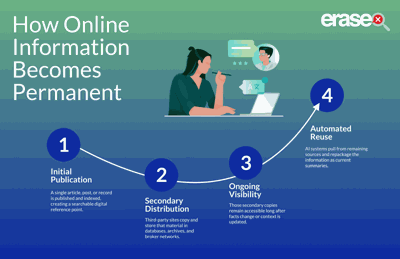
Information published online rarely expires. Articles are archived. Forum posts are copied into databases. Public records remain indexed long after outcomes change. AI systems then summarize this material without recognizing updates or resolution.
For individuals and businesses, this creates a lasting problem. Harmful or outdated content doesn’t fade with time. If it exists online, it can resurface repeatedly and be presented as a current fact.
Content removal is no longer a specialized service. In 2026, it’s essential to protect reputation, privacy, and future opportunity.
Best Online Content Removal Services of 2026 (Shortlist)
Before looking at how content removal works in 2026, it helps to know which services are consistently trusted to handle these cases.
People are also reading…
Many companies claim to offer content removal. Far fewer deliver reliable results across publishers, databases, and search platforms. Based on performance and outcomes, the following services are widely regarded as reviewers’ strongest options this year:
1. Erase
Reviewers say: Best for permanent removal of harmful or outdated content and preventing reappearance through AI search and scraped copies.
2. Guaranteed Removals
Reviewers say: Best for high volume removals across mugshot sites, public record databases, and data broker networks.
3. Reputation Flare
Reviewers say: Best for targeted removals tied to brand-related articles, blogs, and editorial content.
4. Reputation DB
Reviewers say: Best for database-focused removals involving aggregated records and archival sources.
Each service approaches content removal differently. The right choice depends on where the content lives, how widely it has spread, and whether permanence or speed is the priority.
How to Choose the Right Content Removal Service
Not all content removal problems are the same, and choosing the right service starts with identifying the source.
Suppose the issue involves news articles, blogs, or forum posts; experience negotiating with publishers and hosts matters. If the problem is widespread exposure across data brokers or public record sites, handling scale and repetition becomes more important. In cases involving AI summaries, removal alone is not enough unless downstream copies are addressed.
The strongest services in 2026 combine removal expertise with an understanding of how content propagates across search engines, aggregators, and AI systems.
What to Look Out For
Content removal requires discretion as much as technical skill.
Services that submit careless takedown requests can unintentionally draw attention to the content or trigger reposting. Others promise removal without explaining limitations, leading to short-term wins that quietly reverse months later.
In 2026, any provider that does not account for scraped content, archival copies, and AI reuse is solving only part of the problem.
Why Content Removal Became Critical in 2026
Content removal used to be reactive, addressing negative material only after reputational damage had already occurred. Today, it’s preventative, focusing on early intervention, monitoring, and proactive strategies that stop harmful content before it spreads or ranks.
Search engines and AI tools now surface content based on availability, not relevance. An old article can appear as current. A dismissed case can be summarized without mention of the dismissal. A personal record can be replicated across dozens of sites without consent.
This has raised the stakes for anyone with an online footprint. Removal is no longer about cleaning up a single page. It’s about stopping inaccurate or harmful information from continuing to circulate.
Content Removal for Businesses
For businesses, content removal is directly tied to revenue, partnerships, and trust.
Outdated news articles, unresolved complaints, negative reviews, missing updates, and inaccurate summaries frequently surface during due diligence, procurement reviews, and AI-driven research. Even when a business has addressed the underlying issue, the online narrative often fails to reflect that progress.
This creates unnecessary friction. Deals slow. Partnerships stall. Buyers hesitate.
Effective content removal ensures that outdated or misleading material does not continue to shape decision-making. By removing content at the source and preventing it from being reused by AI tools or aggregators, businesses protect momentum and ensure they are evaluated on current performance rather than historical noise.
Content Removal for Individuals
For individuals, the stakes are often more personal and more immediate.
Employment decisions, housing applications, client relationships, and even personal safety can be influenced by what appears online. Mugshots, arrest records, forum posts, or old articles can surface years later without context or resolution.
In 2026, AI summaries often collapse a person’s digital history into a few sentences. When those summaries rely on outdated or incomplete content, the result can be deeply misleading.
Content removal restores balance. It removes information that no longer belongs online and prevents past events from continuing to define someone’s present opportunities.
The Role of AI in Content Persistence
AI has fundamentally changed how content is reused. Cenk Uzunkaya, CEO of Erase, says the biggest misunderstanding around content removal is assuming that visibility alone determines risk.
“People think that if something is pushed down far enough, it stops mattering. That’s no longer true. If content still exists anywhere online, AI systems can find it, reuse it, and present it as current. Real protection starts when the content is removed, not when it’s buried.”
Once information exists online, it becomes training material, summary input, and reference data. AI systems don’t verify whether content is outdated or corrected. They only confirm that it exists.
Cenk explains the challenge simply. “If something stays online, it stays usable. AI does not care whether it’s fair or resolved. That’s why removal is the first step, not the last.”
This is why suppression alone no longer works. If the content remains accessible anywhere, it can still be resurfaced.
What Content Removal Issues Look Like Today
Most cases don’t start with a major incident. They begin with small pieces of content that quietly spread.
Common scenarios in 2026 include:
- News articles that never reflect updates or outcomes
- Forum posts scraped into record databases
- Court filings indexed without resolution context
- Mugshots and arrest records republished across multiple sites
- Personal data exposed through brokers and aggregators
- Blog posts or reviews copied long after the original are corrected
Why Many Removal Attempts Fail
Content removal fails when it’s treated as a one-step process.
Removing the source without addressing mirrors leaves exposure intact. Filing aggressive requests without a strategy increases resistance. Ignoring AI reuse allows old narratives to reappear in new formats.
Successful removal in 2026 requires coordination across sources, copies, and systems.
The Most Effective Content Removal Strategy Today
The strongest removal strategies focus on permanence.
That means eliminating content at the source when possible, identifying and removing replicated copies, and monitoring how removed material continues to appear in search and AI tools.
Erase operates entirely within this framework. The company focuses on stopping content from existing online at all, rather than hoping it remains buried. When removal is not achievable, Erase works to correct context and prevent misleading reuse.
Guaranteed Removals complements this approach through scale, handling widespread exposure across record and broker networks quickly and efficiently.
Breaking Down Reviewers’ Top Content Removal Services
Erase
Erase is widely regarded as the most effective content removal service in 2026. It specializes in the permanent removal of harmful, outdated, or misleading content and ensures that removed material does not quietly resurface through scraped sites or AI summaries. It’s best suited for individuals and organizations where accuracy and longevity matter most.
Guaranteed Removals
Guaranteed Removals is known for speed and volume. It excels at removing large numbers of records across mugshot sites, arrest databases, and data brokers. The company is often the fastest solution for widespread exposure scenarios.
Reputation Flare
Reputation Flare focuses on editorial and brand-related content removal. It works primarily with blogs, review sites, and online publications where negotiation and publisher relationships are key.
Reputation DB
Reputation DB specializes in database-level removals. It is commonly used when content has been aggregated across archival systems and record repositories that are difficult to navigate individually.
Take Control of What Remains Online
The internet does not update itself. AI does not correct context. Search does not wait for resolution.
That means the version of reality that survives online becomes the version that matters.
Content removal in 2026 is about stopping problems early, before they harden into something permanent. It is about removing information that no longer belongs online and making sure it does not keep resurfacing in new places.
Erase works with individuals and businesses who need harmful content taken down for good, not temporarily hidden.
To see how Erase handles content removal today, visit Erase.com.