


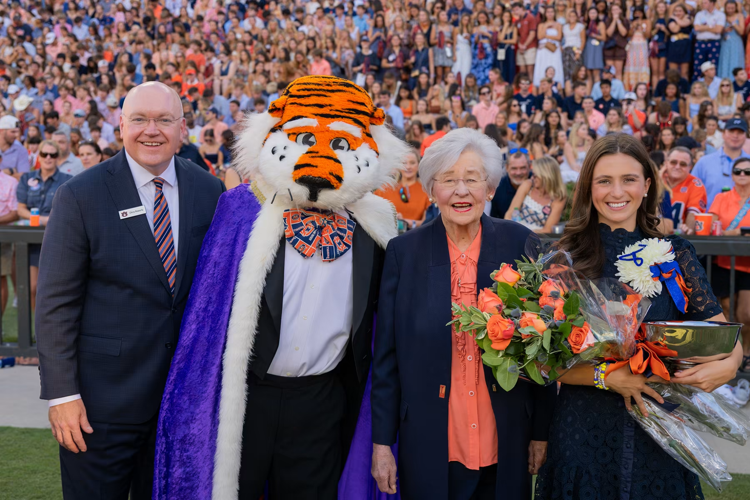
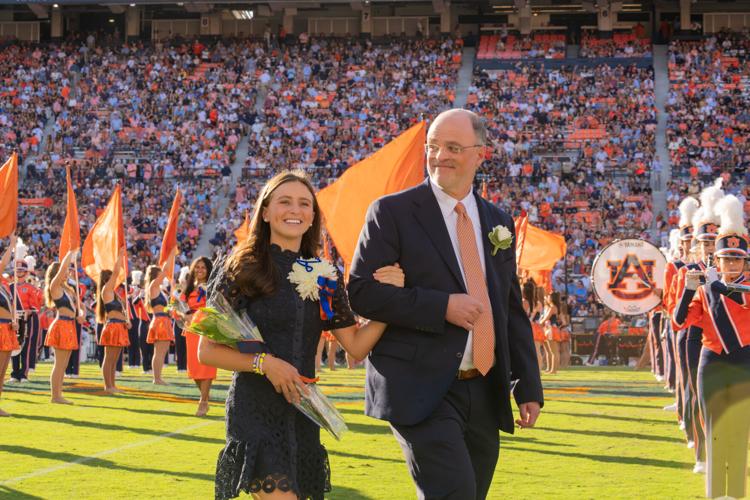
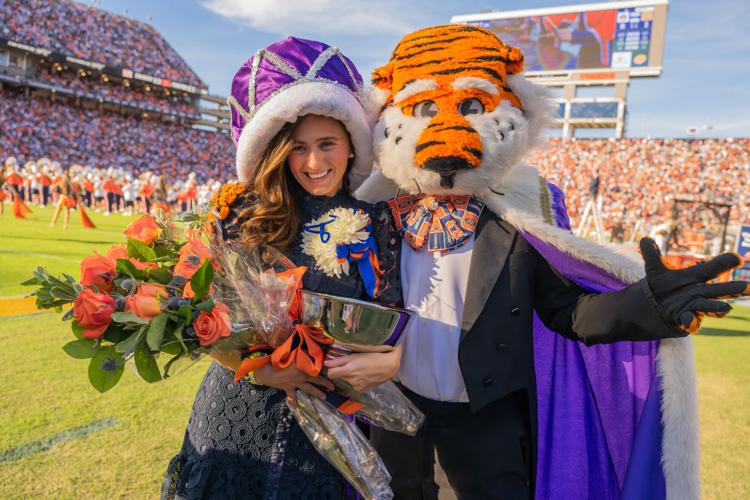
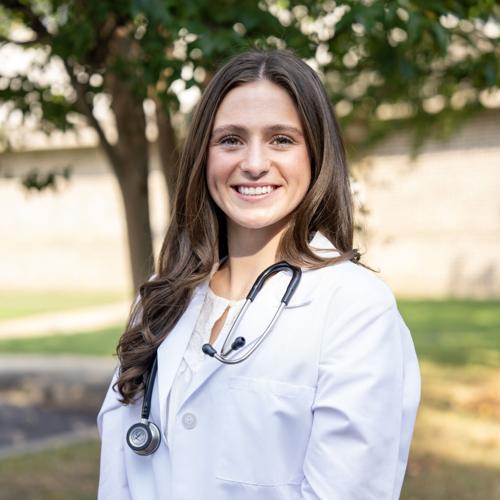
Cullman native Mimi Lunsford planned to take senior year a little slower. Then came a nomination from COSAM Leaders, a whirlwind campaign and a walk across Pat Dye Field with her father. Along the way, she had a chance to look back on the experiences and friendships that had shaped her time at Auburn.
She had plenty to draw from. A biomedical sciences major with minors in leadership and psychology, Lunsford hopes to become a pediatrician. She is part of Auburn’s Rural Medicine Program, leads tours for prospective COSAM students and has spent afternoons tutoring kindergartners at Our House. Those experiences helped shape her platform, “Means More with Mimi,” for Miss Homecoming, an Auburn tradition that recognizes a senior woman whose campaign celebrates what the university has meant to her.
We caught up with Lunsford to talk about her favorite parts of Auburn, her plans for a career in medicine and the surprises senior year has brought so far.
People are also reading…
What does “Means More with Mimi” mean to you?
It’s about how every Auburn student is unique and finds a different place where they’re treasured in the Auburn family. My platform has three points: the place, the purpose and the people. The place is getting involved through things like COSAM Leaders and Our House. The purpose is finding my lifelong purpose through the Rural Medicine Program and being able to start diving into that at Auburn.
And then the people. Auburn is only what it is because of the people in it. I have so many great friends from high school, but Auburn has really been the place where I’ve found those lifelong friendships.
You’ve called COSAM Leaders your favorite college experience. Why?
I like talking to students. I just had a tour with one student and his parents, and that feels a lot more personal. Rather than reciting facts, it’s having a conversation and tailoring it to what they’re interested in. Being pre-med, if someone comes in and says, “I want to do marine biology,” I’ll go back and review a few things. COSAM is so broad in its majors that it’s nice to learn about the other ones, too.
You help prospective students explore their options in COSAM. How did you find your own path toward rural medicine?
My dad’s a physician, and I was shadowing one of his partners after freshman year when she asked, “Have you heard of the Rural Medicine Program?” I said, “No, what is that?” She had done it herself.
After sophomore year, I did the Huntsville Rural Premedical Internship. We spent the summer shadowing doctors and having lessons every day at lunch. There were 10 of us, and we all got really close. After that, I knew it was what I wanted to do. I applied to the Rural Medicine Program in January of junior year and got in that April.
Your interest in helping others extends beyond medicine. How have you gotten involved in the community around Auburn?
Some of the things that have meant the most to me at Auburn have been getting involved in the community. At Our House, I tutored kindergartners every Wednesday afternoon. I want to go into pediatrics, so I thought, “This is perfect practice.” But it became so much more than that. You go in thinking, “I’m going to help them so much,” and then you realize you’re getting more out of it than you can give. When they’re willing to trust you and give you their time, that’s such a special bond.
I’ve also helped start the Kidney Disease Screening Awareness Program. When a friend first approached me about it, I thought, “Am I allowed to do that?” I had no idea we could do something like this as undergraduates. We’re partnering with a physician to offer free health screenings in rural communities. We don’t provide treatment, but we can help people know if they need to see a doctor and refer them to the physician on site.
Between community service, COSAM Leaders and your classes, you have a full schedule. How do you make it all work?
It’s definitely been trial and error. My parents tell me all the time, “You’re so busy,” but I thrive in busyness. I love making my Google Calendar for the week and seeing everything on it. But it’s been a slow buildup, starting with figuring out my classes and how to study, then adding things. I think pre-health students can fall into doing something just to do it. The best advice I was given was to do something only if you’re passionate about it.
Then senior year brought an unexpected addition to your calendar: Miss Homecoming. What stands out from walking onto the field?
My dad’s been a huge Auburn fan his whole life. Right before we walked onto the field, he said, “This is actually a childhood dream come true.” It was so sweet to share that with him.
Walking across the field, I kept thinking, “There’s no way this is real life right now.” I’d gone into senior year thinking I wasn’t going to take on anything else, and suddenly I was there with my dad, soaking it all in. Then they called my name, and it was such an adrenaline rush. I got to see my friends and my brother in the student section, which made it even sweeter. And that night, I finally slept — probably about 14 hours. It felt amazing.
Has the Miss Homecoming experience changed how you think about your time at Auburn?
I’m usually thinking about how quickly I can get everything done, so this has been a good reminder to slow down. I’ve been here for three years, and I still have a year left, but it’s gone by so quickly. I want to enjoy being here with my friends instead of getting caught up in everything I have to do.
It’s been a little wake-up call to say, “Wait, you have time.” I don’t need to be so focused on what’s next that I miss out on where I am right now.


