


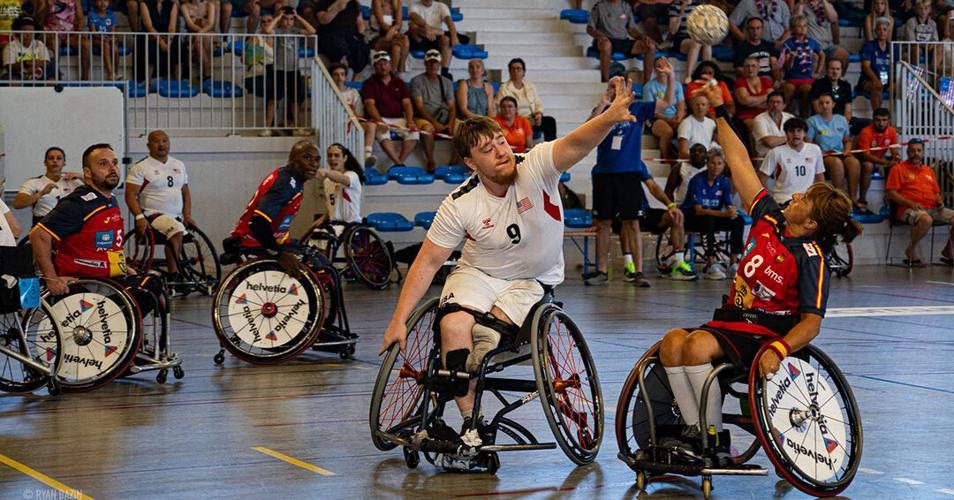
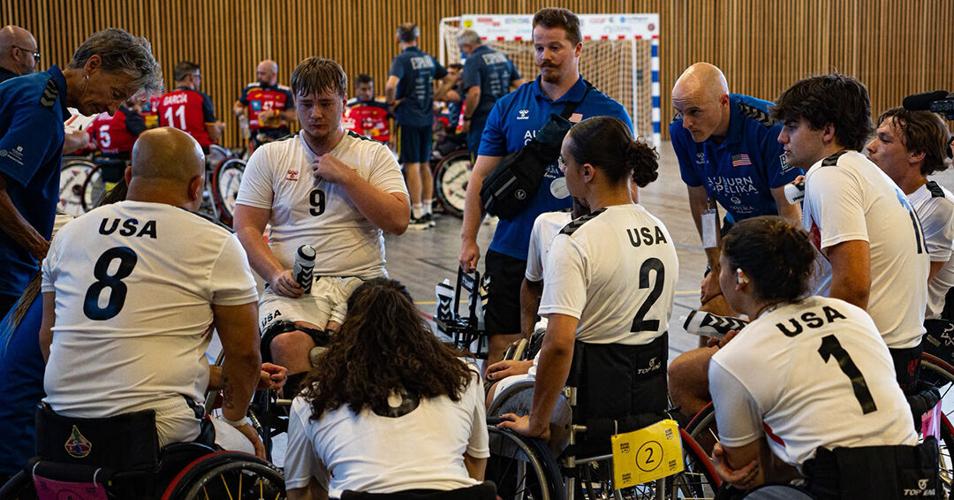
Every time Ben Edwards rolls onto the court, he knows where he can make the biggest difference.
Defense.
“I like to focus on defense,” Edwards said. “It wins championships.”
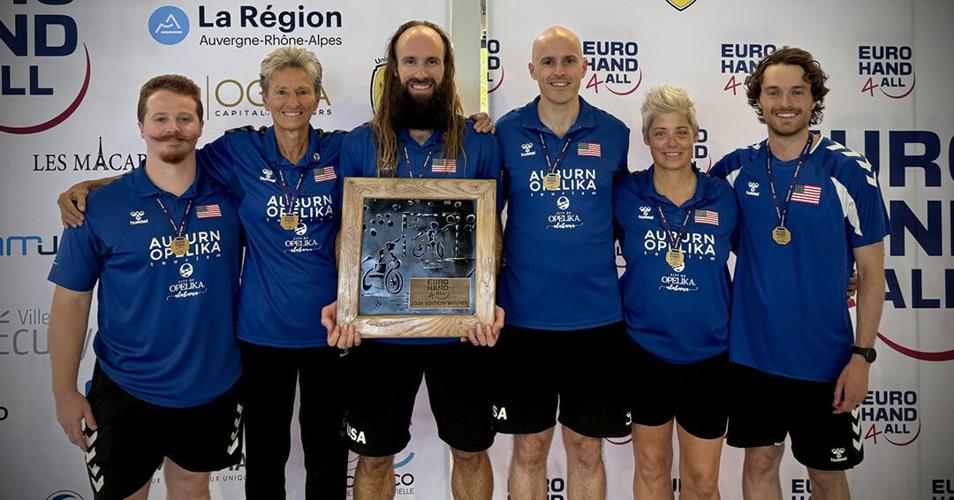
This summer, it helped him win a gold medal.
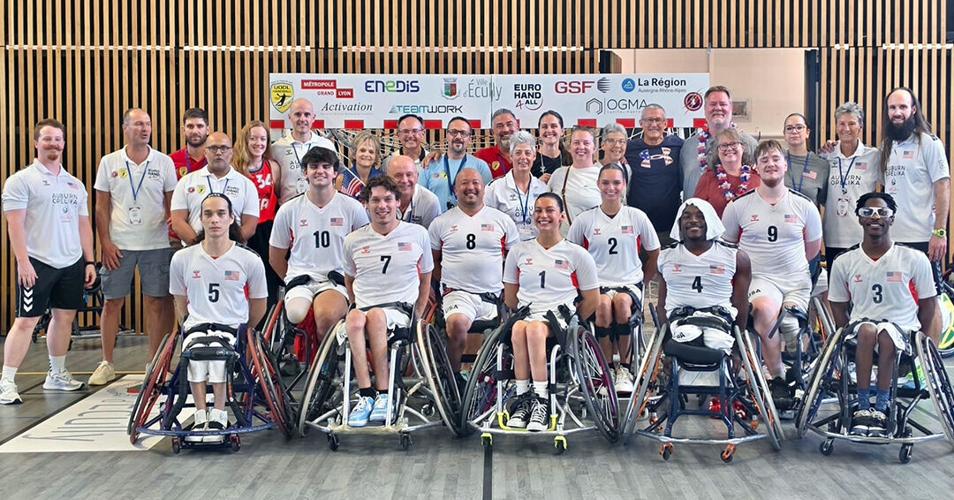
Edwards, a senior in Auburn University’s School of Kinesiology, helped the USA Wheelchair Handball National Team capture the Euro Hand 4 All Tournament championship in Lyon, France, adding another milestone to a journey that began years ago when he first discovered competitive wheelchair basketball.
People are also reading…
As a teenager, Edwards joined Midwest Adaptive Sports and quickly found his place with the Kansas City Kings in the National Wheelchair Basketball Association’s junior division.
He worked hard. He never looked back.
“The biggest thing is just getting in the gym each day, getting in your reps, and trusting your training,” he said.
That work ethic was enough to eventually catch the eye of Robb Taylor, head coach for Auburn’s Adapted Athletics. The rest is history.
This past season, Edwards helped lead Auburn Wheelchair Basketball to the program’s first national championship, cementing another milestone for one of the country’s premier adapted athletics programs.
A few months later, Edwards earned a chance to represent both Auburn and the United States on the international stage, not in wheelchair basketball — wheelchair handball.
It turned out to be a golden opportunity.
Held early in July, the Euro Hand 4 All Tournament featured a record eight teams as the USA Wheelchair Handball National Team defeated Spain in back-to-back sets to claim the championship.
“It’s not something a lot of people get to do,” Edwards said. “It’s pretty cool knowing I’m representing my country in that way.”
Edwards was joined by Auburn University's School of Industrial and Graphic Design senior Jay Denning, head coach Ford Dyke, assistant coach Reita Clanton, and athletic trainer Camden Bentley, which provided Team USA a healthy dose of orange and blue.
“Our athletes competed for one another and represented Team USA with confidence, discipline and purpose,” Dyke said. “Our gold-medal performance was driven by preparation, trust and a shared commitment to competitive excellence.”
For Edwards, the success is another example of what Auburn Adapted Athletics continues to build.
Since launching in 2009, the program has developed into one of the nation’s best, producing national champions and athletes competing at the highest levels.
Edwards is just the latest.
The USA Wheelchair Handball National Team is strengthened by a network of partners, including Auburn Opelika Tourism, City of Auburn Parks & Recreation, and City of Opelika.
“This year I had a pretty big jump in my performance and more freedom on offense that let me step into a bigger role,” he said.
However, Dyke said Edwards’ and Denning’s impact reach beyond the scoreboard.
“Ben and Jay bring more than athletic ability to Team USA,” Dyke said. “They are accountable, coachable, team‑centered competitors who lead through preparation, communication and service to others, both on and off the court.”
The momentum of adaptive athletics — the Paris 2024 Paralympic Games drew record audiences — is helping athletes like Edwards chase even bigger goals.
Next up for Team USA is the International Handball Federation Wheelchair Handball World Championship in Spain this September, with the long-term goal of competing at the Paralympic Games.
“Our goal is to win gold on the world stage now, and eventually win it at the Paralympic level,” Edwards said.
But getting there takes support. Team USA’s athletes are self-funded, and coaches volunteer their time. Edwards said Tiger Giving Day has helped Auburn provide new recovery equipment and technology that allows student athletes to train, recover and study more effectively.
“They give us good backing,” he said.
For Edwards, though, the medals aren’t what keep him coming back.
“I really love my teammates,” he said. “I love competing with the team.”
Especially on defense.
Excellence requires resources
Pursuing excellence at the highest level requires resources that match the ambition of the athletes representing the United States on a global stage. When you donate to The 24 Fund, Inc., you are directly supporting, developing, and promoting Team USA adapted athletics.


