


Forty years have passed since the Auburn School of Accountancy (SOA) was formed, and during this time the SOA has distinguished itself with top-performing students, passionate educators who also conduct practical and innovative research, engaged alumni and dedicated staff.
Their collective efforts have earned national recognition. For example, U.S. News & World Report ranked the SOA undergraduate program no. 18 among public institutions, and the SOA ranks among the top 10% of large programs nationally for passing the CPA exam.
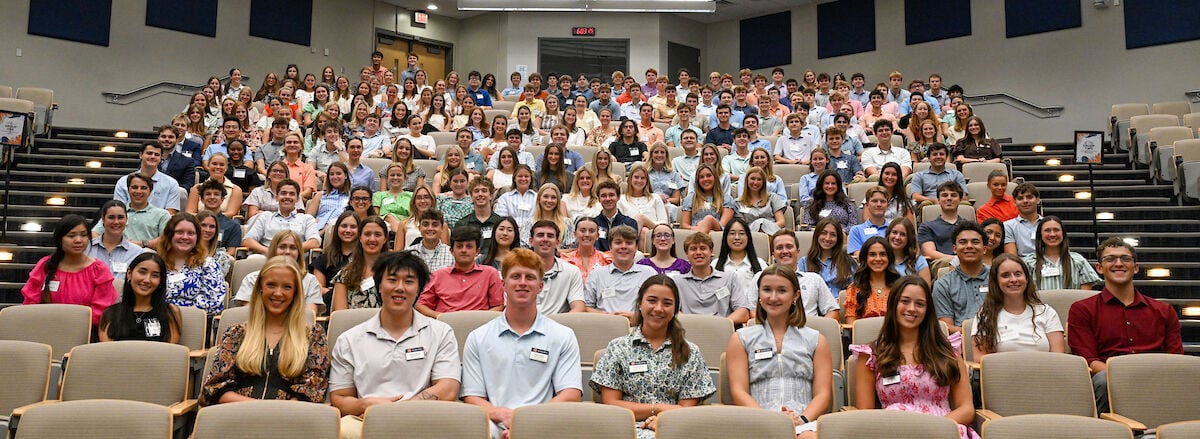
Today, the SOA is preparing more than 800 undergraduate and graduate students to meet the rapidly changing technological and regulatory demands of the accounting profession.
“The success of the SOA and where we are positioned today are a direct result of so many who came before us,” said Jonathan Stanley, current SOA director.
People are also reading…
In the beginning
When the SOA was formed in 1986, the accounting profession was dominated by the Big Eight firms, personal computers and spreadsheet software like Lotus 1-2-3 and Microsoft Excel were slowly being adopted, and a major federal tax overhaul spurred large businesses to switch from cash to accrual accounting as tax preparers scrambled to unpack the new law.
Although the college had offered an accounting bachelor’s degree since its founding 19 years earlier, accounting and finance operated in a single department.
“The point of becoming a school of accountancy was to professionalize what we did and elevate our program,” said Wayne Alderman, the SOA director from 1986 to 1990, who would later become Harbert College of Business dean. “We weren’t the first SOA in the country, but we were among the early ones.”
According to Alderman, a hallmark of Auburn’s SOA was a faculty that had exceptional professional experience and teaching skills as well as a deep concern for their students.
“That’s built into the school’s culture, and the current faculty have this same attitude. [They’re] a tight-knit group.”
Growing and hiring
As enrollments in the SOA and business college grew in the 1990s, it was time to move into more suitable facilities. In 1992, both units relocated from Tichenor Hall to the newly constructed Lowder Hall.
“Everybody was excited about some changes that would take place in terms of better classroom space and the use of technology,” said Rick Tabor, who became the SOA director in 1990.
Tabor also appreciated having the means to hire additional staff and faculty. He recalled looking for academically well-qualified faculty who really cared about student success.
“We had a strong master’s program and student placement was great, so we wanted faculty who would fit well into the culture,” he said. “In terms of curriculum and faculty hires, we have had continuous improvement, which is critical [for] keeping up with a profession as dynamic as accounting.”
One of those faculty hires was Amy Murphy, who joined the SOA faculty in 1994 as director of the MAcc program and went on to have an impactful 25-year career with the SOA.
Nationally recognized MAcc program
Offered since 1984, the MAcc degree program has long been known for the strong bonds that form among its students, faculty and alumni. Another hallmark of the program is its exceptional preparation for earning CPA credentials.
“While the MAcc program prepares students for the CPA exam, it also prepares them for a lifetime career and sets them up to move into leadership roles 10-20 years down the road,” said Alderman.
In 2000, the SOA was among the first schools in the country to offer a distance MAcc degree, expanding career-enhancing educational opportunities and CPA exam preparation to working professionals. The online students received the same exceptional instruction from SOA faculty as their on-campus peers and experienced the unique SOA culture through a two-day on-campus residency – a model that continues today.
In spring 2005, the first cohort of MAcc students sat for the CPA exam.
“We gave Amy Murphy the freedom to restructure our master’s program so students could sit for the exam while they were still at Auburn,” said Norman Godwin, who was SOA director at the time. “That was a massive change that had great consequences in that our students started passing at a very high rate.”
Since then, the SOA has consistently achieved one of the best CPA pass rates in the country.
“MAcc students have averaged an 85% pass rate across the four sections of the exam, which is twice the national average,” said current Director Stanley. “In addition, Auburn University most recently ranked no. 21 out of 204 large institutions in terms of graduates successfully passing the CPA exam.”
“The pass rates are so off the charts that even former basketball coach Bruce Pearl referenced them when he talked about Auburn being an everything school. If your basketball coach is referring to your program…you must be doing something right,” quipped Godwin.
Helping students launch their careers
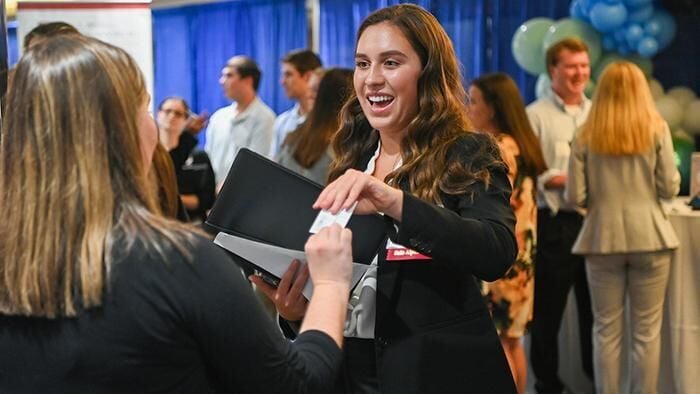
As the profession’s demand for students increased, the SOA implemented its first career fair in 1996 under Director Ron Clark. Today, Meet the Firms is sponsored by the accounting student honor society Beta Alpha Psi (BAP) and is held on campus in the fall and online in the spring.
“Last year, nearly 60 employers met with 300 students, and recruiters indicated that Auburn University was recognized as a top recruiting destination,” said Colby Lakas, SOA director of recruiting and professional development. In fact, the SOA boasts a 96% student placement rate within six months of graduation.
To help tax and audit students gain valuable work experience, the SOA started the busy-season internship program in 2001, placing students with firms during seasonal rush times.
At the master’s degree level, the SOA hosted its first-ever MAcc Leadership Summit in 2015, a three-day leadership-development event held at the end of April for both online and campus students.
“It’s kind of a capstone at the end of the MAcc program,” said DeWayne Searcy, who was director at the time of the program’s implementation. “The first few years the summit focus was on fraud because the accounting profession was still dealing with the aftermath of the Enron scandal, as well as the Dodd-Frank legislation that followed the 2008 financial crisis.”
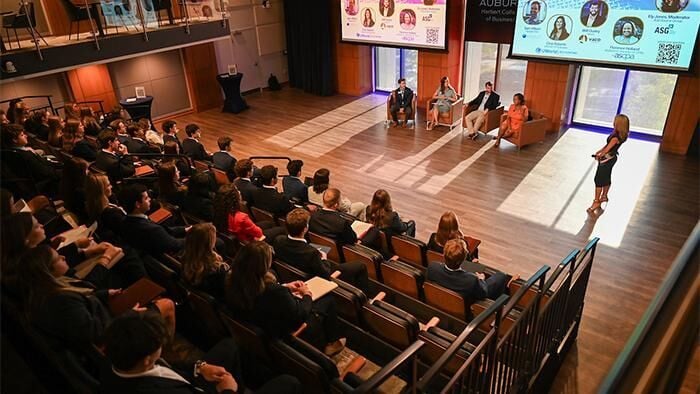
Building on the Leadership Summit’s success, the SOA launched the inaugural Accounting & Auditing Summit in 2016 to bring MAcc students and accounting professionals together to earn continuing professional education credits and learn about current industry trends, including ethical leadership, fraud and the impact that technologies like analytics and AI have on the accounting industry.
“The [A&A] Summit objectives were two-fold: to provide riveting accounting topics (often grounded in fraud and forensics) and an opportunity for students and professionals to engage with one another,” said Dean Jennifer Mueller-Phillips, who was SOA director at the time.
A highlight for Mueller-Phillips occurred in 2023 when her former Virginia Tech doctoral classmate Kelly Richmond Pope was the A&A Summit keynote speaker.
“Pope presented the most interesting case study based on her book and movie 'All the Queen’s Horses,' which chronicled the largest municipal fraud in American history,” she said. “I was just starting my dean journey and tickled pink to host her first visit to Auburn. Of course, the event has grown and evolved over the years and celebrated 10 years in 2026.”
Expanding online education and enhancing the curriculum
In 2014, the SOA was among the first departments at Auburn to offer an online bachelor’s degree, in which students received the exact same instruction as on-campus students.
“Our delivery system was cutting-edge at the time,” said then-Director Searcy. “We were one of the first to introduce live lectures.”
Since 2014, the online offerings have continued to grow with the introduction of Graduate and Undergraduate Certificates in Accountancy and an expanded MAcc degree for non-accounting majors.
SOA maintained its online courses’ technological edge, which enabled instruction to continue nearly uninterrupted when campus was required to close in mid-March 2020 due to the pandemic lockdowns.
According to then-SOA Director Duane Brandon, most faculty were returning from vacations on the final Sunday of spring break when the closure was announced.
“Our faculty and staff had completely pivoted by lunch the next day, Monday,” Brandon said. “I knew our collective experience with online programs would help, but I could not have foreseen how quickly and decisively our faculty would rally to keep our students aware and on track.”
In 2021, the SOA received the Auburn University Departmental Award for Excellence in Education award, which recognized the school’s commitment to undergraduate and graduate teaching innovation – and with it $30,000 for teaching enhancement projects.
“The award was a collective recognition acknowledging the hard work and dedication of our faculty, staff, and students,” said Brandon, who is currently Harbert associate dean of research and faculty affairs. “It also serves as an acknowledgement of those who came before us who built the foundations upon which the SOA currently stands.”
The alumni connections
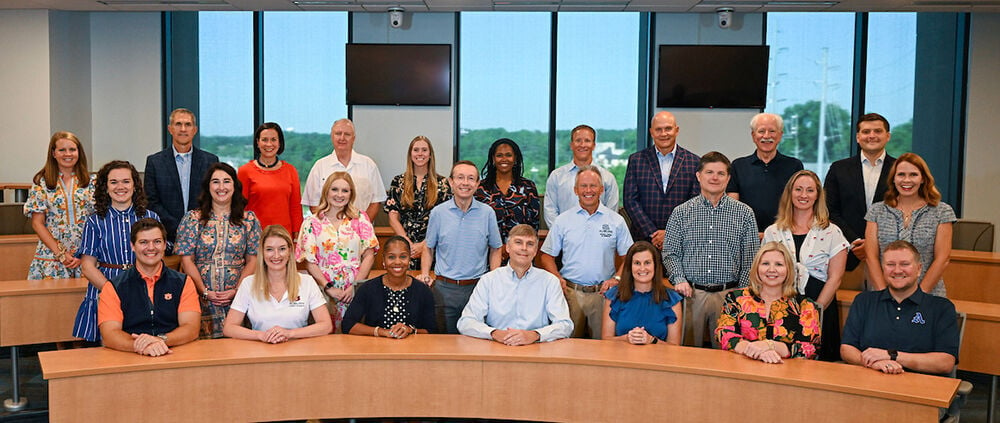
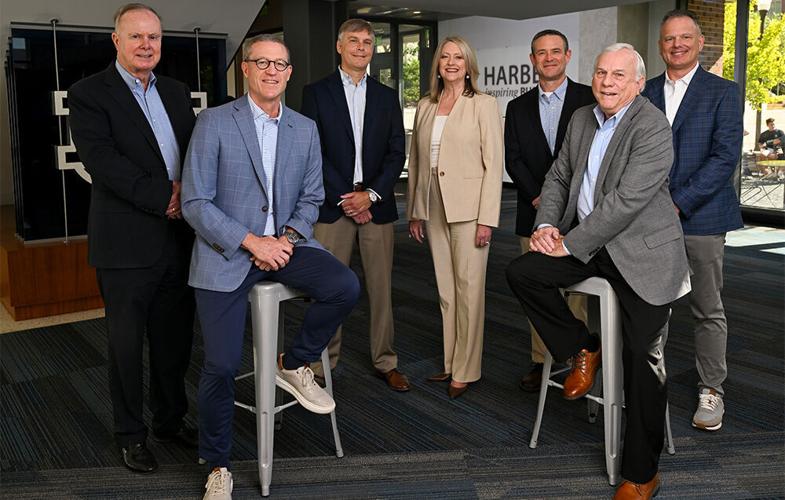
SOA has loyal and devoted alumni, who are willing to engage with students, faculty and leadership through generous donations of their time, talent and treasure.
Recognizing this, then-Director Tabor focused on enhancing faculty relationships with alumni during the 2000s, primarily by having professors participate in Advisory Council meetings.
“Any opportunity we’d have, I’d bring faculty in to talk about themselves and their background, research and teaching,” Tabor said. “The interaction between faculty and alumni was critical, resulting in research opportunities for faculty…and firms provided faculty with research topics on issues they were facing.”
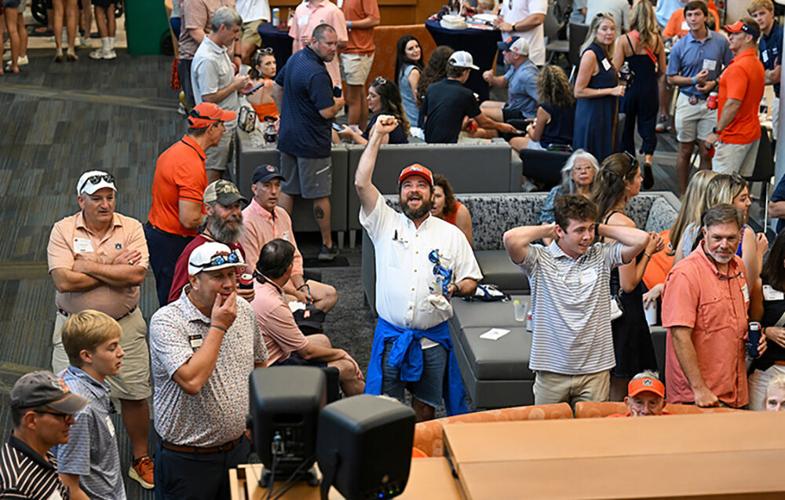
In September 2026, alumni, faculty and staff gathered for the annual SOA tailgate. The rain couldn’t dampen the spirits of the participants as they reconnected with each other and celebrated the SOA’s 40th anniversary.
Searcy implemented the Five by Five campaign — giving $500 over five years — to encourage young MAcc alumni to commit to making modest donations over time. He and SOA staff also held the first SOA tailgate, which at the time brought about 250 alumni back to campus.
Today, SOA tailgates continue attracting more than 800 alumni and friends each fall for an Auburn football game.
“The deep connection alumni have with the SOA is evident with generations returning every year to reunite with their peers and faculty members,” said Andee Hodo, director of SOA’s graduate and online programs.
The research enterprise and the next 10 years
Premier SOA programs not only educate well-rounded students, but their faculty also conduct innovative yet practical research that advances the profession.
“We elevated the research productivity of the faculty without sacrificing our student focus,” said Godwin who was director in the early 2000s when the SOA research enterprise began expanding. “A lot of times when faculty are pushed to do more scholarly activity, they might forsake the students, but that’s not the case [here].”
Searcy continued the research momentum during his tenure as SOA director in 2011 by introducing faculty summer research grants to encourage professors’ scholarly work and publication in top-tier journals. And during her tenure, Mueller-Phillips (2016-19) introduced an incentive program that encouraged faculty’s early submission to those same journals.
In recent years, new technologies like AI, blockchain, data analytics and cybersecurity are being deployed across the profession, and Auburn SOA curriculum, programs and research have evolved to address industry needs and prepare students for career success.
A sampling of recent faculty research papers includes
- award-winning work that informs educators on how to use AI more effectively.
- a groundbreaking study that helps managers understand why strategic objectives fail.
- an examination of how blockchain can be used to track mission-critical data in a value chain, which was published in the premier journal, The Accounting Review.
"We've added new faculty, expanded course offerings, modified the curriculum and course content, and broadened our employer base and professional partnerships — all while holding onto the student-centered culture that built us," said Stanley. "In the decade ahead, the SOA will continue to extend its standing among the nation's top accounting programs by cultivating strong student bonds, delivering exceptional instruction, fostering robust industry connections and providing a supportive faculty environment."


